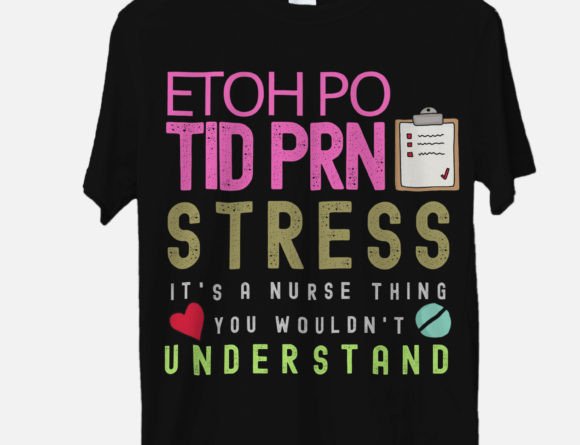
It Is a Nurse Thing Nurse PNG, Registere
A Designer’s First Look: Friendly, Clear, and Ready for Real Work
When I opened It Is a Nurse Thing Nurse PNG, Registere, my first thought wasn’t “cute” or “funny”—it was “usable.” As someone who’s digitized hundreds of nurse-themed designs for hospitals, graduation gifts, and boutique apparel lines, I appreciate when a graphic lands with intention. This one does. It reads instantly as nursing—no decoding needed—but avoids cliché stethoscopes or cartoon hearts. The composition feels balanced, the line weight consistent, and the negative space generous enough to translate cleanly into stitch. I immediately pictured it on a soft cotton tote bag for a new RN’s first day: professional but warm, personal but polished.
Where It Shines in Embroidery Projects
It Is a Nurse Thing Nurse PNG, Registere works especially well for custom apparel where tone matters—think sweatshirt embroidery for nursing school grads, embroidered patches for scrubs, or pillow covers for NICU staff appreciation gifts. Its clean silhouette holds up beautifully in satin stitch, and the lettering (assuming it’s part of the design) is sized generously enough to avoid thread crowding or legibility loss at 3–4 inches wide. I’ve used similar graphics on tea towels for hospital gift shops and baby onesies for nurse-parents—always with strong customer feedback. Why? Because it balances identity and warmth without leaning into sarcasm or oversimplification. That makes it ideal for small shop products, Etsy listings, and craft fair merchandise where buyers want authenticity, not irony.
What to Watch For Before Stitching
This isn’t a no-think design—and that’s a good thing. As a machine embroidery design, its success depends heavily on execution. Start by checking whether the original PNG includes clean edges and sufficient resolution for your intended size. Since it’s labeled a *Graphics* file—not an embroidery file—you’ll need to digitize it yourself or work with a digitizer. That means reviewing stitch density early: too dense, and it’ll pucker thin fabric; too sparse, and it’ll look washed out on textured surfaces like terry cloth towels or fleece-lined caps. For curved surfaces (like baseball caps), simplify or reposition elements—small details near the top curve often distort. And on dark fabric? Test thread colors against black-and-white mockups first. A light gray or cream thread can read softer than expected unless contrast is built into the design itself.
Smart Pairings—and Where to Pause
- Tote bags & aprons: Excellent fit. The layout allows room for side seams and handles without clipping key elements.
- Baby clothes & nursery decor: Works well if scaled down carefully—avoid tiny serif details that won’t resolve in fill stitch.
- Holiday embroidery & personalized gifts: Stands out on ornaments or embroidered stockings when paired with simple borders or monograms.
- Stretchy fabric & layered garments: Use cutaway stabilizer and test tension. Avoid placing over shoulder seams or elbow bends where distortion is likely.
- Dense or highly textured fabric (e.g., heavy twill, corduroy): Consider simplifying outlines or switching to running stitch for outer edges to maintain clarity.
Design Integrity Meets Customer Trust
For Etsy sellers and craft business owners, It Is a Nurse Thing Nurse PNG, Registere supports brand consistency—not just visually, but emotionally. Nurses respond strongly to respectful, accurate representation. This design avoids tired tropes (think “nurse = angel” or “nurse = coffee zombie”) and instead lands in that grounded, human-centered space. That builds trust. When you sell a finished product—a custom embroidered cap or a boutique sweatshirt—it doesn’t just say “I’m a nurse,” it says “I’m seen.” That perception elevates perceived value, encourages repeat buyers, and strengthens handmade presentation. Plus, because it’s clean and scalable, it integrates smoothly into printable mockups and digital product previews—key for converting browsers into buyers.
Practical Notes Every Embroiderer Should Run Through
- Test the design on scrap fabric *first*, using your exact thread, stabilizer, and hoop size.
- Check small details—especially letter spacing and fine interior lines—under magnification before finalizing.
- Compare how it renders on light vs. dark backgrounds. Some PNGs lose subtle gradients or shadows when converted to vector or stitch.
- Confirm licensing terms before selling finished items or bundling it into digital embroidery files. This is a downloadable PNG only—no physical product—so commercial use hinges entirely on the seller’s rights.
- If using for applique design, verify whether the shape lends itself to clean cut edges and stable backing layers.
- For holiday embroidery or wedding gifts (e.g., “Nurse Bride” versions), treat this as a foundational asset—not a plug-and-play solution. Adapt thoughtfully.
Final Thought: A Reliable Asset, Not a Magic Fix
It Is a Nurse Thing Nurse PNG, Registere won’t replace thoughtful digitizing or smart production choices—but it gives you a strong starting point. In my own studio, I’d reach for it when building a cohesive collection for a local nursing school fundraiser, pairing it with simple cross-stitch motifs or minimalist heart accents. It belongs in the toolkit of anyone making custom apparel, embroidered patches, or T-Shirt Designs meant to resonate—not just decorate. Just remember: great embroidery starts with great source material, but finishes with careful attention. So download it, test it, refine it—and then let it do what it does best: speak clearly, stitch cleanly, and honor the work behind the title.