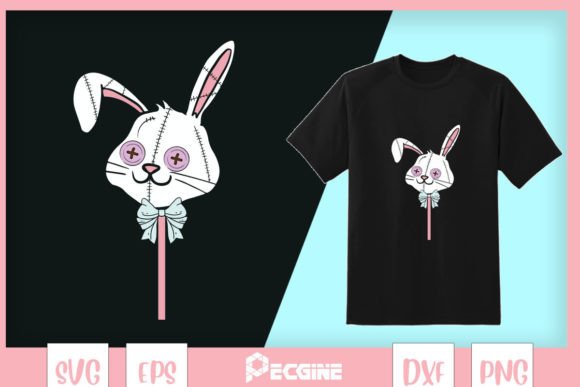
Goth Pastel Bunny Lollipop
First Impressions: Sweet, Slightly Subversive, and Surprisingly Versatile
When I opened the Goth Pastel Bunny Lollipop files, I didn’t just see a graphic—I saw a mood shift. It’s that rare design that lands somewhere between nostalgic candy store charm and quiet rebellion: soft lavender ears, a glossy black lollipop swirl, delicate pink cheeks, and subtle cross motifs tucked into the bow. The silhouette is clean and compact—not too tall, not too wide—making it feel instantly adaptable. As a machine embroidery design, its strength isn’t in complexity, but in confident contrast: pastel tones meet goth sensibility without leaning into cliché. That balance makes it ideal for custom apparel, embroidered patches, or boutique nursery decor where personality matters more than polish.
A Real-World Test: Stitching It onto a Linen-Cotton Tote Bag
Last week, I prepped a small-batch run of embroidered linen-cotton tote bags for a local indie gift shop. We chose the Goth Pastel Bunny Lollipop as the centerpiece—centered on the front panel, sized to 3.2" wide. Why? Because it reads clearly at that scale, holds detail without overcrowding, and feels intentional, not cutesy. On medium-weight fabric with light cutaway stabilizer, the satin stitch on the bunny’s ears held beautifully, and the lollipop swirl stitched smoothly with minimal thread breaks. The fill stitch in the bow retained soft texture, and the tiny cross details stayed legible—no ghosting or bleeding. Customers responded immediately: “It’s like my teenage diary came to life,” one said. That kind of emotional resonance is gold for a craft business or Etsy seller building brand voice through handmade product.
Where It Shines (and Where It Needs Thought)
The Goth Pastel Bunny Lollipop excels in projects where tone and timing matter:
- Custom apparel: Works cleanly on sweatshirts, crewnecks, and relaxed-fit tees—especially when paired with minimalist typography or monochrome palettes.
- Baby embroidery: Its gentle shape and non-aggressive goth elements make it perfect for organic cotton onesies or muslin swaddle blankets—just avoid dense fill stitches on ultra-thin fabrics.
- Holiday embroidery: Swap thread colors to mint + charcoal for Easter, or dusty rose + deep plum for Halloween—its structure supports seasonal reinterpretation.
- Embroidered patch: Clean outer edge and moderate detail level mean it’ll hold up well when heat-applied or sewn onto denim jackets or backpacks.
- Small shop product: Looks sharp on tea towels, pillow covers, and aprons—particularly when used as a single focal point rather than part of a busy layout.
But be thoughtful about placement and substrate. On stretchy fabric like jersey knits, use tear-away + topping to prevent puckering around the lollipop swirl. On dark fabric, test thread color contrast first—the pale pastel tones may need deeper secondary shades (e.g., slate gray instead of lavender) for clarity. And while it’s lovely on curved surfaces like caps, keep hoop size in mind: this design fits comfortably in a 4” x 4” hoop, but pushing beyond that risks losing definition in the bow’s inner curve.
Design Assets That Support Real Workflow
The file package—SVG, PNG, DXF, EPS, all with transparent backgrounds—is genuinely practical. As an embroidery designer, I used the SVG to resize precisely in my digitizing software; the pre-sized PNG saved time when building printable mockups for client approvals; the DXF helped me align it with vector-cut applique layers; and the EPS gave me flexibility for branding assets in Illustrator. No extra cleanup needed. That’s rare—and valuable—when you’re juggling multiple embroidery project deadlines or preparing digital product previews for your Etsy shop.
What It Adds to Your Finished Product
This isn’t just decoration—it’s context. The Goth Pastel Bunny Lollipop elevates a plain sweatshirt into something with narrative weight. It signals care in curation, confidence in aesthetic judgment, and awareness of contemporary subcultural nuance. For customers, it reads as handmade, intentional, and quietly sophisticated—traits that build trust and justify premium pricing. For your craft business, it reinforces brand consistency across product lines: same visual language on a baby onesie, a tote bag, and a holiday card bundle. And because it avoids overused tropes, it stands out in crowded marketplaces without shouting.
Practical Embroidery Designer Notes Before You Stitch
- Test on scrap fabric first—especially if using textured weaves or blends. Linen, terry cloth, and brushed cotton behave differently under needle tension.
- Review stitch density before sending to machine. High-density fills can overwhelm lightweight fabrics or cause stiffness on wearable items.
- Confirm hoop size compatibility. While the design fits standard 4” hoops, verify your machine’s maximum stitching area.
- Inspect small details at actual stitch-out size—the cross motifs and eyelash lines should remain crisp, not fuzzy or lost.
- Try black-and-white mockups to assess value contrast, especially for dark garment applications.
- Use appropriate stabilizer: light cutaway for stable wovens, tear-away + topping for knits or napped fabrics.
- Check licensing terms before selling finished items or reselling the digital embroidery file—this affects commercial embroidery use and digital product listings.
Final Thought: A Design That Earns Its Place
The Goth Pastel Bunny Lollipop doesn’t try to do everything. It doesn’t scream. It doesn’t overcomplicate. Instead, it offers quiet confidence—a well-balanced, emotionally intelligent piece of design assets that works as hard as you do. Whether you’re prepping a batch of personalized gifts, building a cohesive line of T-Shirt Designs, or sourcing Graphics for a boutique rebrand, this embroidery file earns its spot in your active library. Not because it’s trendy—but because it’s thoughtfully made, practically usable, and consistently memorable.