Christmas Tree of Cat Paw Dog Paw
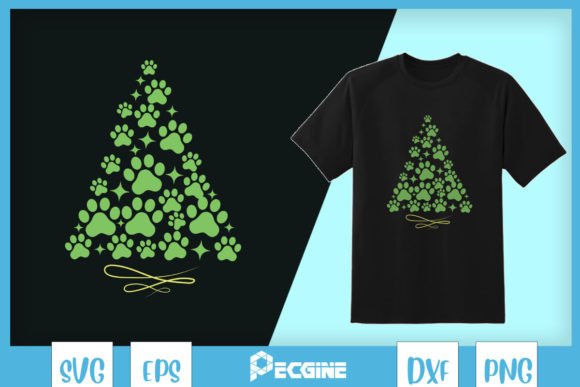
When I first opened the Christmas Tree of Cat Paw Dog Paw graphic, I immediately smiled. It’s not just another holiday design — it’s a quiet, clever love letter to pet owners. The tree is built entirely from alternating cat and dog paw prints, arranged in a triangular evergreen shape with a tiny star on top. There’s a soft, whimsical personality here that feels warm without being overly cutesy. As someone who has spent years transforming digital art into machine embroidery designs, I could instantly see this working on a canvas tote, a cozy sweatshirt, or a kitchen towel for a pet-loving household. The design lands in the Crafts category as a Graphics type, meaning you get clean, versatile files — not a pre-digitized embroidery file. For experienced embroiderers and small business owners, that’s not a drawback; it’s a creative starting point.
First Look: A Design That Tells a Story
The Christmas Tree of Cat Paw Dog Paw has a centered, balanced composition. The paw prints vary slightly in size, mimicking natural clusters like ornaments on a real tree. The overall shape is unmistakably a Christmas tree, but the moment you notice the individual paws, the design shifts from generic holiday decor to something personal. It’s the kind of visual that makes a dog mom or cat dad stop and say, “That’s my tree.” The lines are clean, the curves are smooth, and the negative space is well managed — all critical for a smooth embroidery digitizing process. As a graphic, it’s provided in SVG, PNG, and DXF formats. The SVG is pre-sized and ready to use in your design software, which is perfect for scaling or importing into digitizing programs. The PNG is high-resolution with a transparent background, ideal for mockups, and the DXF adds versatility for other applications. In my initial review, I wasn’t staring at a finished embroidery file; I was looking at a design asset that I could truly make my own.
Real-World Embroidery Use: How It Might Stitch Out
Turning the Christmas Tree of Cat Paw Dog Paw into a machine embroidery design requires a thoughtful digitizing approach. The tree itself can be a combination of fill stitch for the solid body and satin stitch for the paw outlines if you want definition. Alternatively, you could digitize the entire tree as a single applique shape with the paw prints as decorative topstitching. The paw pads are the most delicate part — if you shrink the design too small, those tiny toe beans might blur or lose definition under dense stitching. I always recommend testing at a minimum of 4 inches wide on a tightly woven fabric like cotton canvas. The star at the top is simple but effective; a few running stitch accents or a metallic thread can really make it pop. Because the graphic is vector-based, you get crisp edges and no pixelation when resizing, which saves a huge amount of cleanup time before you even start digitizing. I’d place this design in the medium complexity range for embroidery — not beginner-proof, but absolutely manageable for anyone with a solid understanding of stitch density and pull compensation.
Best Projects for This Design
This graphic naturally slides into a long list of handmade product ideas. I’ve already mentally stitched it onto a natural linen apron, a set of flour sack tea towels, and a slate-grey sweatshirt. Here’s where it really shines:
- Custom apparel — sweatshirts, t-shirts, and hoodies for holiday pet portraits or family pajama sets.
- Personalized gifts — add a name or date underneath for a one-of-a-kind present.
- Embroidered patches — digitize with a merrowed edge and sell them as iron-on or sew-on patches for pet lovers.
- Tote bags and pouches — the design scales beautifully for a large tote front or a smaller zipper pouch.
- Baby and children’s items — onesies, bibs, and tiny blankets resonate with families who include their pets in everything.
- Nursery decor — framed hoop art or a soft pillow cover for a pet-themed nursery.
- Kitchen towels and aprons — perfect for a holiday baking scene or a hostess gift.
- Boutique branding — pet sitters, dog walkers, or veterinary clinics can use it on staff shirts or merchandise.
For Etsy sellers and craft business owners, this design taps into the massive pet lover market. It’s seasonally specific yet still warm enough to sell as a year-round gift for anyone who treats their animals like family. I’ve seen similar concepts sell out at craft fairs when paired with a clever tagline.
The Custom Tote Bag That Stopped Traffic
Let me give you a real scenario. Last week, I prepared a mockup of the Christmas Tree of Cat Paw Dog Paw on a natural canvas tote bag for a client who runs a small dog walking service. She wanted a holiday gift for her best clients. I digitized the design using the SVG, scaled it to about 5 inches wide, and stitched it out in a deep forest green with a metallic gold star. The tote was simple, but the result was remarkable. People kept asking where they could buy one. The paw prints gave the tree a textured, hand-drawn quality that felt both premium and deeply personal. The design didn’t just decorate the bag — it told a story. That’s the kind of emotional connection that turns a $20 tote into a cherished keepsake. When you’re running a small shop, details like this are what build repeat customers and word-of-mouth buzz.
Fabric and Product Considerations
Not every fabric plays nicely with this design. I’d avoid anything too thin or stretchy, like lightweight jersey or ribbed knit, unless you’re using a heavy cutaway stabilizer and are comfortable with some distortion. The paw prints, while charming, can lose their shape if the fabric shifts during stitching. Here’s my quick fabric compatibility list:
- Excellent: cotton canvas, linen, denim, twill, fleece, quilted cotton, sturdy woven blends.
- Good with extra care: French terry, sweatshirt fleece, baby rib knit (use a fusible mesh stabilizer and a topper).
- Approach with caution: thin performance fabrics, silk, loosely woven burlap, or anything with a deep pile that swallows small details.
Dark fabric is another thing to consider. If you’re stitching the tree in a dark green on a black sweatshirt, the contrast might be too low, and the paw prints could disappear. I always test a black and white mockup first to check whether the design’s silhouette holds up. On light backgrounds, the tree is crisp and readable. On dark backgrounds, you might need to outline the paws in a lighter thread or choose a brighter shade of green. Also, curved surfaces like caps and hats are tricky — the tree’s vertical shape tends to warp on the curved front of a baseball cap. If you’re stitching on a cap, consider a lower profile design placement or a smaller scale.
What It Does for Your Brand or Gift
I’ve always believed that an embroidery design should do more than just look good — it should make the finished product feel more valuable. The Christmas Tree of Cat Paw Dog Paw does exactly that. It adds a layer of emotional storytelling that elevates a simple personalized gift into something that feels intentionally chosen. For a craft business, this design helps build a cohesive brand around pet-friendly, heartfelt products. It’s also extremely giftable. Imagine a new puppy owner receiving a set of embroidered tea towels with this tree design — it’s an instant heirloom piece. From a customer trust perspective, using a design that resonates emotionally shows you understand your buyer. It’s not a generic Santa or reindeer; it’s a specific, thoughtful motif that speaks directly to a person’s life. That kind of recognition builds buyer engagement and loyalty faster than any generic holiday design ever could.
Designer Notes: Before You Stitch or Sell
This is where I put on my pragmatic hat. The Christmas Tree of Cat Paw Dog Paw is a graphic, not an embroidery file, so you’ll need to handle the digitizing yourself or hire a professional. Here are the steps I always follow:
- Check the provided files. The SVG should be clean and scalable. Open it in your digitizing software and look for any overlapping nodes or tiny gaps that might cause thread breaks. The PNG is your best friend for quick mockups and client previews.
- Test on scrap fabric first. I can’t stress this enough. Use the same fabric and stabilizer you plan to use for the final product. Adjust stitch density, pull compensation, and underlay until the paw prints are crisp.
- Thread color contrast. The design relies on the paw outlines to define the tree shape. If your thread blends too closely with the fabric, you’ll lose the entire effect. Go bold with the tree color, or use a contrasting outline.
- Hoop size matters. Don’t force this into a 4x4 hoop if the details get too tiny. The SVG is pre-sized, but you can scale it down moderately — just be mindful that the paw toes are the first thing to close up.
- Stabilizer choice. For most woven projects, a medium-weight cutaway stabilizer works perfectly. For knits, add a water-soluble topper to keep the paw prints from sinking into the fabric.
- Licensing and commercial use. Since this is a digital graphics product in the Crafts category, always confirm the license terms. Look for information about selling finished physical products or digital items created from the files. Most graphics packs allow commercial use of finished items, but don’t assume — check the product page before you add it to your Etsy listing or small shop product line.
- Mockup thoroughly. Use the PNG file to create printable mockups in different colors. Show clients how the design looks on a tote bag, a sweatshirt, or a kitchen towel. This builds confidence and often seals the sale.
One more thing: if you’re planning to sell the digitized embroidery file as a digital embroidery file, you must verify that the original graphics license allows derivative digital products. Most do not, so it’s safer to sell only finished physical items. Always read the fine print.
Final Take: A Design That Earns Its Place in Your Library
After working with the Christmas Tree of Cat Paw Dog Paw across multiple mockups and a few real stitch-outs, I’m convinced it’s a keeper. The design combines a universally loved holiday shape with a pet-centric twist that feels fresh and personal. It’s not overly complex to digitize, it scales well, and it fits a dozen different embroidery project paths. Whether you’re a hobbyist making a gift for your vet, a creative entrepreneur building a seasonal product line, or an apparel decorator looking for a design that actually sells, this graphic gives you a strong foundation. Yes, you’ll need to put in the digitizing work, but the payoff is a finished product that looks intentional, professional, and deeply lovable. My advice? Grab the files, test a small version on a scrap of fabric, and watch how people react. I’d bet money you’ll be stitching it again and again.